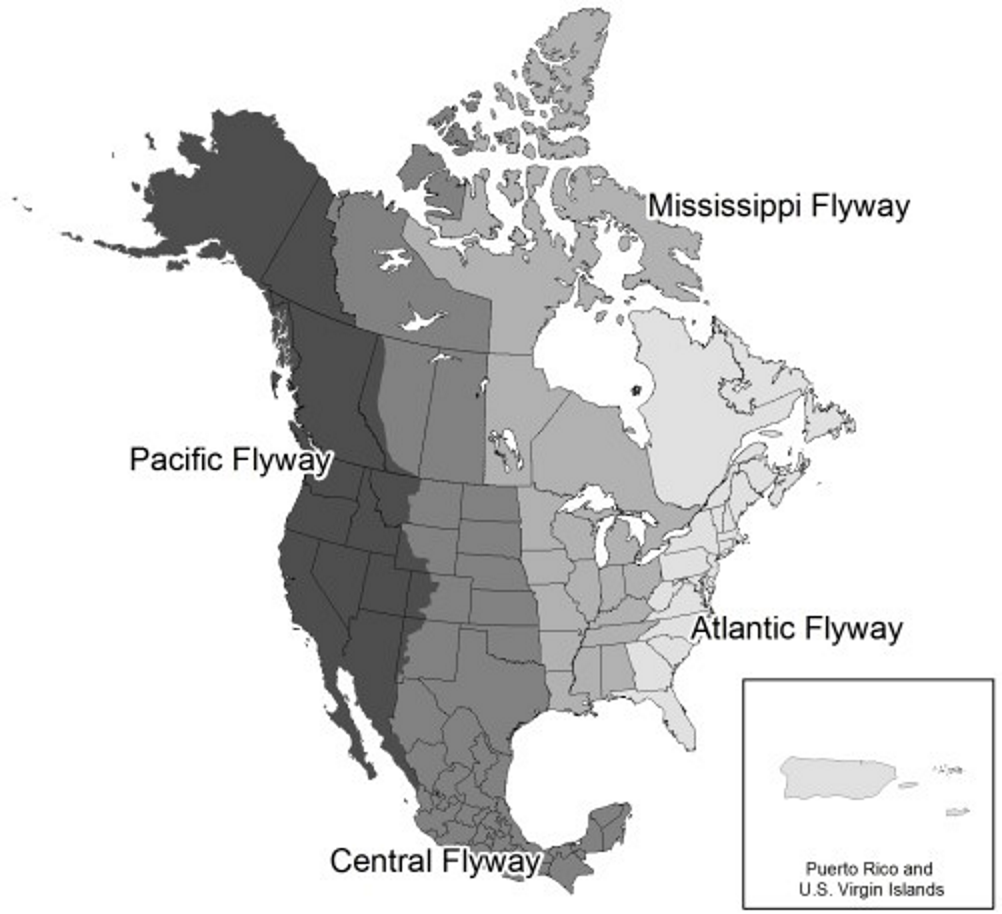
What is the Pacific Flyway and why is it important? Birds spend the spring and summer in places where there is mild weather and plentiful food to raise their young. As winter approaches, they leave for warmer climates. About 70% of birds in North America migrate, and, of those, 80% migrate at night. The Pacific Flyway is the area where millions of birds migrate from Alaska to Patagonia. They travel this path in both spring and fall, searching for better living conditions, like a highway for birds. Along the Pacific Flyway, there are many stops where many species of bird stop to rest. They take this time to feed and regain their strength for the path ahead, some staying for the entire season, but most only staying for a few days. The Pacific Flyway is a path that has been followed for generations, and it is crucial for the species of birds that frequent it.
These migrating birds use natural sources of light, like the Moon and stars to fly during the night. Artificial light disrupts their migration and confuses their natural systems. Birds are drawn to the artificial lights of buildings, where they end up colliding with the structures. It is estimated that collision kills as many as one billion birds in the United States each year. It isn’t just skyscrapers that are the problem; nearly half of the one billion birds that die each year collide with homes and smaller buildings. While some birds are able to survive the initial collision, many are too tired and lost to continue their journey. Light pollution can also trigger birds to migrate before they’re supposed to. Research has found that artificial light can cause birds to migrate earlier by as much as a week. While this might not seem very significant, arriving too early or too late could lead to dangerous circumstances if weather and food conditions are not met. Over time, these changes have decimated bird populations and will continue to do so unless we do something to help.
So, what are people doing about it? Several organizations are working to mitigate light pollution along the Pacific Flyway, and they are leading the “Lights Out” campaign. They act to promote responsible lighting and educate the public about how to protect nocturnal migrating birds. Some of the organizations that are currently participating are DarkSky International, National Audubon Society and Regional Chapters, Bird Alliance of Oregon, and the San Diego Bird Alliance.
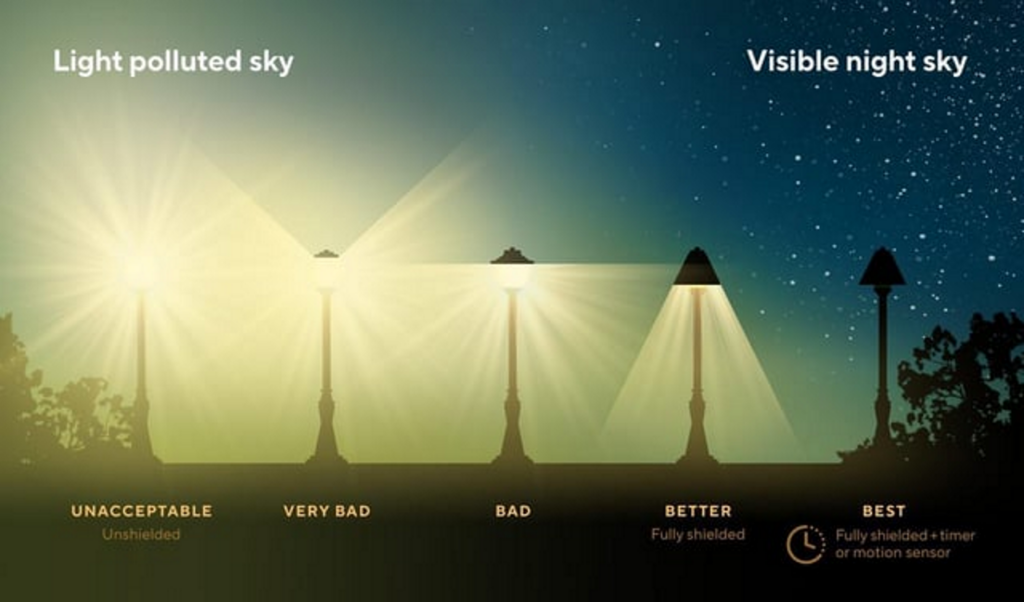
These organizations are making a big difference and so can you! Look out for organized Lights Out Programs in areas near you, and feel free to lend a helping hand to other organizations in your area. One small thing you can do is mounting shield fixtures on your outdoor lights, which keeps the beam facing downwards. Opting for warmer colors of lights can also help; blue and white lights are more disruptive and cause more glare. Even closing your curtains at night or minimizing outdoor lighting can reduce light pollution. And, of course, spread awareness. The more people who know about the damaging effects, the better. You can make big steps to spread awareness, like sharing presentations with your community, posting online, or just talking to friends and family.
If we work together as a community and spread awareness about the danger of light pollution, then we can make a change and protect birds along the Pacific Flyway.