Last Tuesday, the EPStars team got the opportunity to interview Dr. Jennifer Schulien about her work on studying light pollution in Lake Washington.
Dr. Schulien is an aquatic scientist with a degree in phytoplankton physiology and biology. She began as a scientist interested in plant pigments, which are the primary way plants capture energy. However, as cuts in funding, especially to NASA and earth sciences, have drastically reduced research done towards climate change and climate science, she shifted her attention to our local salmon population. More specifically, how light pollution is affecting salmon here in the Pacific Northwest.
In case you haven’t read our article on light pollution yet, to sum it up, light pollution is created by artificial light. To be exact, it is seen extensively around cities, where millions of artificial lights are on through the night, in homes, streets, and more. As this light reflects on clouds, it brightens the sky and creates a skyglow around the city. This is why, if you live in the middle of a city, you can’t see many stars in the night sky or the Milky Way.
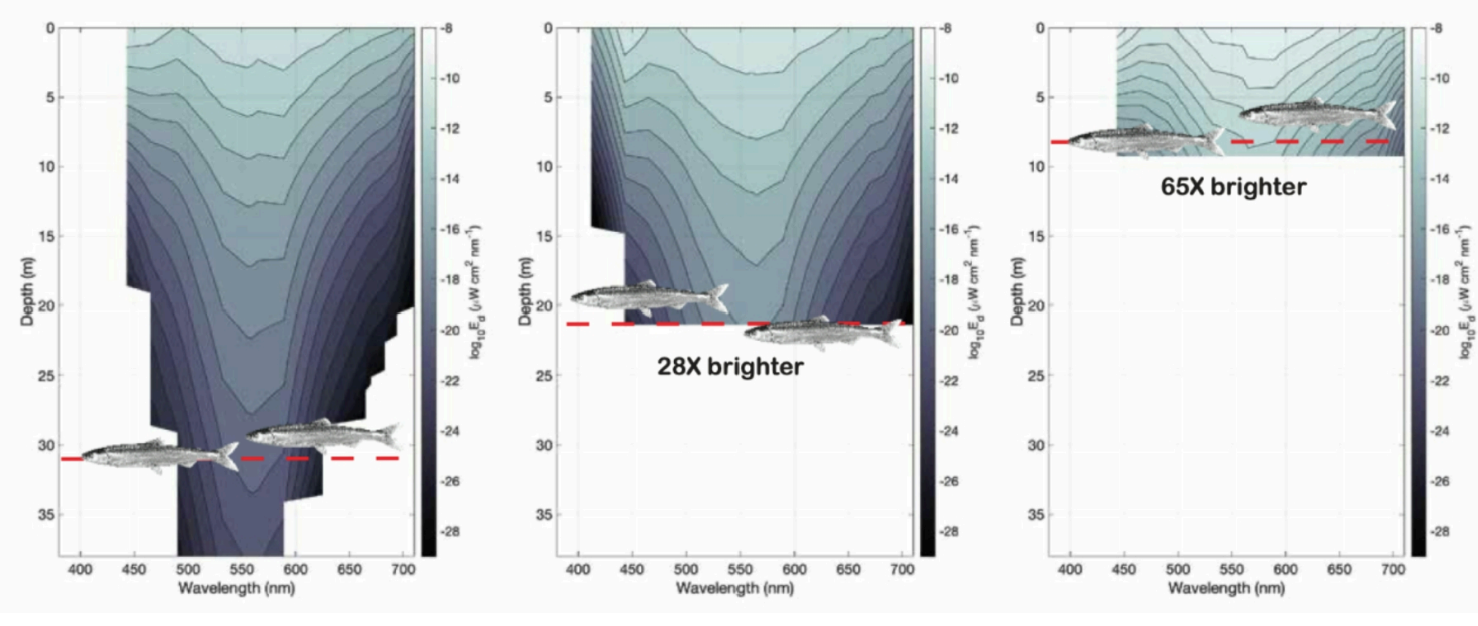
Light pollution not only disrupts our sleep schedules, confuses birds along the Pacific Flyway, and obscures our stars, but it also creates a significant problem for migrating salmon. Because salmons don’t have a natural defense in the way that, for example, a turtle has a shell and a porcupine has its spikes, they rely on using the nature around them to hide from predators. One of the methods salmon employ is swimming at night, when they can let the river carry them downstream or head towards the ocean. This is where light pollution becomes an issue. Because light pollution is brightening our nights, salmon are losing their cover to hide from predators. This migration period is key for salmon. Salmon need to head out to the sea in order to find more food and grow larger, so they can return in a few years for spawning, or reproducing. Thus, losing this period would mean a significant decline in the salmon population.
Unfortunately, light pollution isn’t the only thing contributing to the recent decline in the salmon population. Salmon, like almost all fish, require a specific water temperature and environment in order to thrive. As global warming heats our oceans, the zone where it is the ideal temperature for salmon is shrinking. Additionally, due to the Marine Mammal Protection Act, which was passed in 1972 to protect the then-declining marine mammal population, the number of these marine mammals has grown globally. These are the same mammals which consume salmon, and from 1975 to 2015, the number of Chinook salmon consumed by these mammals increased by 9,000 metric tons.
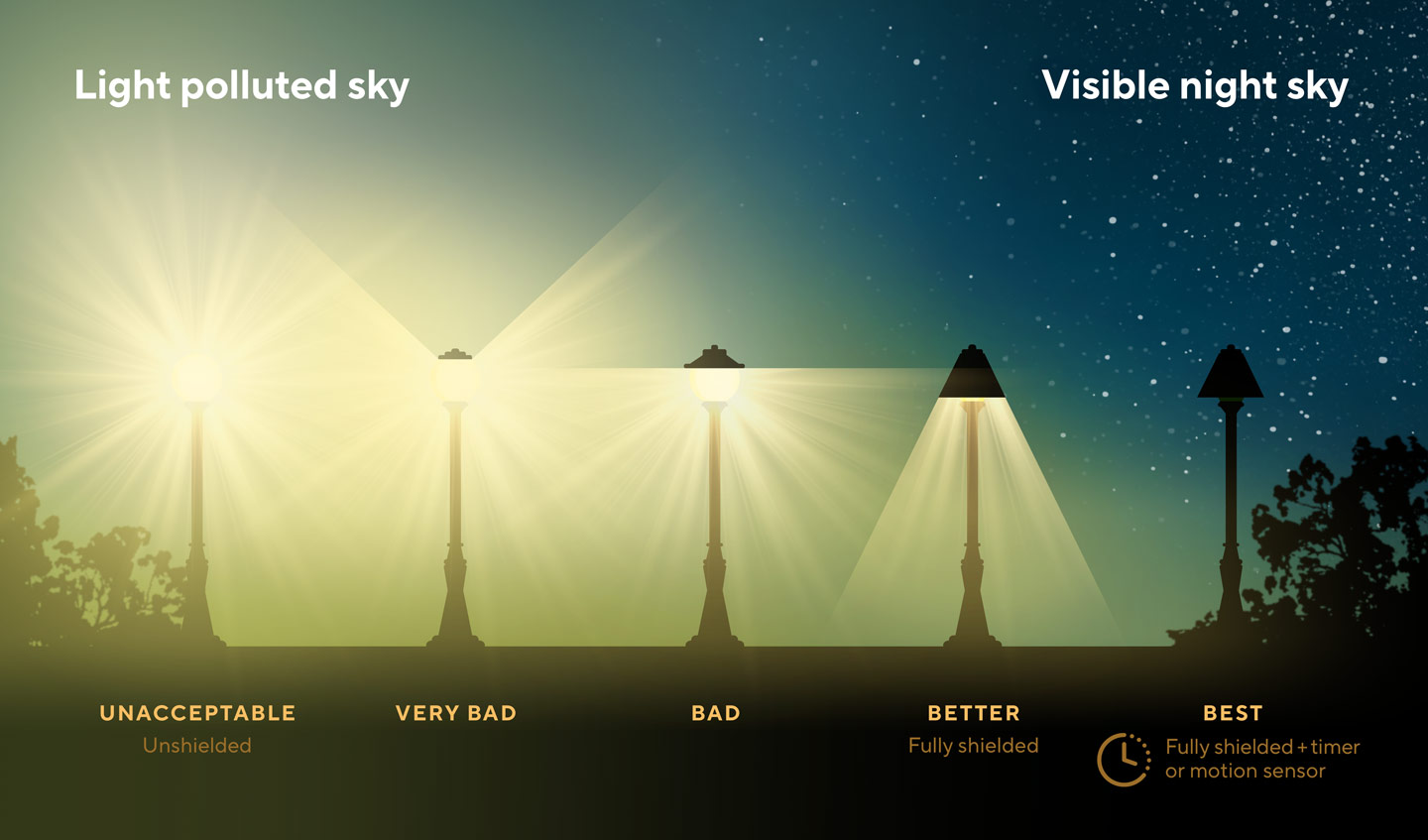
Thankfully, there is still hope: light pollution is an issue that we can all have a hand in fixing. You can reduce the artificial light you are putting into the environment by being conscious about your actions. For example, make sure all the lights in your home are off before you leave or go to bed, and cover your window with curtains or blinds after sunset. If you want to take an extra step, you can switch to motion sensor lights and install shades for lights which point upwards.
Dr. Schulien remains optimistic that the people in Seattle care; they want to do something and those changes are accessible. While the future of environmental science is still uncertain, hopefully, this lapse in federal funding is only temporary, and we will begin to see institutional change as more people become aware of this issue.
You can read more of Dr. Schulien’s work here.